KORE Outdoors Podcast Features Centium on AI Visibility in the Outdoor Industry
The KORE Outdoors Podcast features Centium AI Founder Michael Rueckert on AI visibility and what outdoor brands need to do to earn AI recommendations.
The KORE Outdoors Podcast featured Centium AI Founder Michael Rueckert and MMGY Origin Director of Digital David Kenworthy in a long-form conversation on AI visibility, Answer Engine Optimization (AEO), and how AI models are reshaping brand discovery in the outdoor industry.
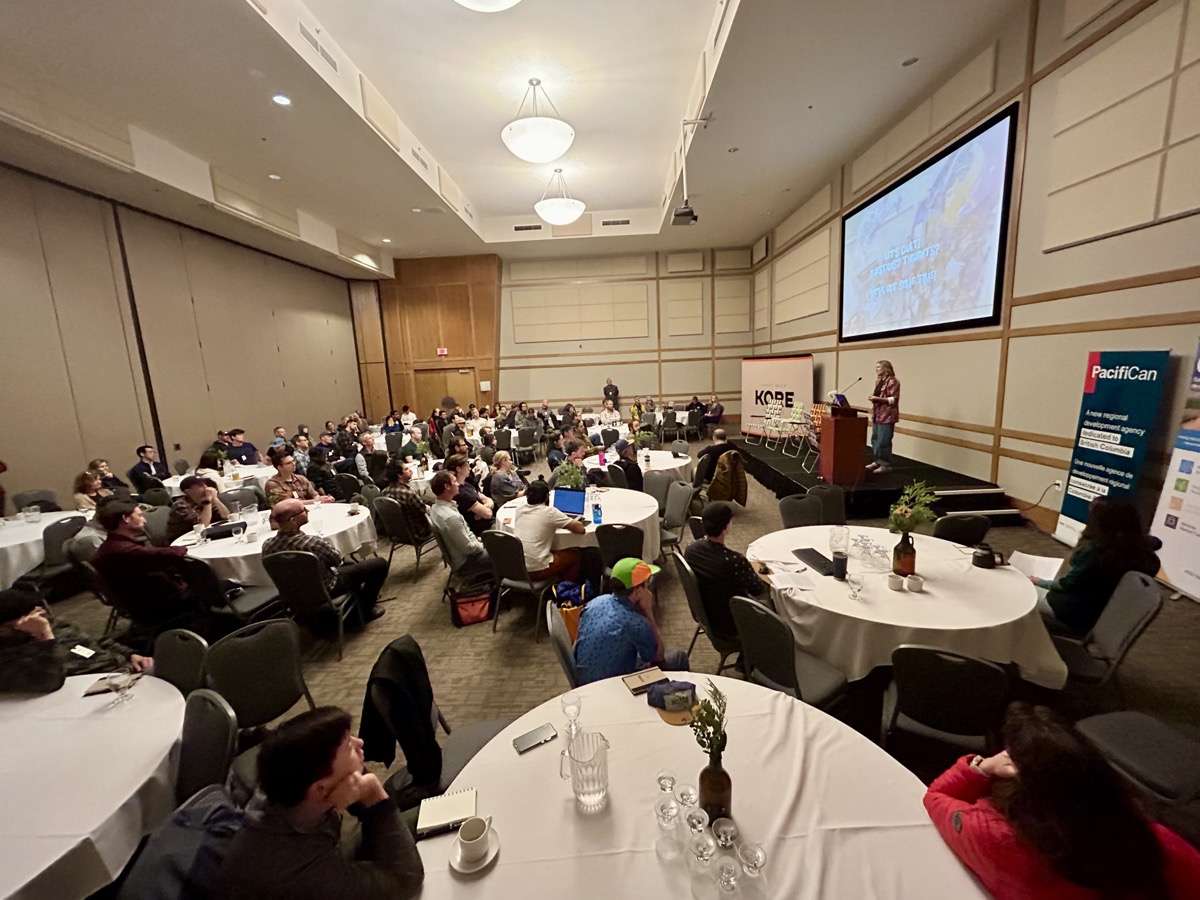
KORE Outdoors is a grassroots non-profit based in the Kootenay region of British Columbia that supports outdoor gear makers, creators, and entrepreneurs across North America. Its biweekly podcast, hosted by Christian Rawles, has become a hub for outdoor industry marketing and entrepreneurship. Rawles previously owned the outdoor apparel brand Ambler Mountain Works for 15 years and now serves as a KORE Business Advisor, coaching outdoor founders and leaders.
The episode also continues a collaboration between Centium AI and MMGY Origin, the outdoor specialty arm of MMGY Global. Kenworthy first wrote about Centium AI in a September 2025 Origin feature that mapped the shift from search to AI-driven travel recommendations. On the KORE podcast, he joined Rueckert to take the conversation deeper for outdoor brand operators.
Rueckert opened with the fundamentals. AI models draw conclusions from content, not direct product experience. "AI is feeding on content on the internet," Rueckert told the podcast. "It can't use the product. It can only rely on what it sees online."
He framed how AI responds to a brand query in two modes. "One way AI answers a prompt is a closed book exam," Rueckert explained. "We put it in a room, close the door, and we're asking it for running shoes. It can only answer based off what it knows." The second mode, the open book exam, is when the model searches the live web during the response, which gives newer brands a path to surface that trained data alone would not provide.
Kenworthy then surfaced the structural shift happening across the web. "About 60 percent of all Google searches end in zero clicks right now," he told Rawles. "60 percent of people that Google anything don't go to a website anymore." He tied that trend to a second number. "50 percent of the traffic on the internet today is bots and 50 percent is humans. Who do we build websites for these days? Do you build them for humans or do you build them for robots?" His analogy was the inflection point the industry hit when mobile traffic crossed desktop, now happening again with bots and humans.
“
What if these models are your future customers? What if they're actually the ones making the purchases? And so it really matters what that customer thinks about you.
Michael Rueckert, Founder of Centium AIKORE Outdoors supports outdoor gear makers, creators, and entrepreneurs across North America from the Kootenay region of British Columbia. Centium AI already serves more than one hundred outdoor brands, making the platform a deep-specialty home for operators in this community.
The conversation pivoted to where AI actually finds its answers. Contrary to expectation, large legacy publications are not always the sources AI leans on. Outdoor-specific authority sites win. "LLMs are looking for credibility signals," Rueckert said. "Reviews, rankings, best of lists, accolades, specs, any sort of data it can use to help make decisions. We see those drive outsized citation." Across Centium AI's data set of more than one hundred outdoor brands, Gear Lab ranks as the most-cited source, with category-specific outlets like Runner's World and Cycling Weekly citing heavily within their lanes.
Rueckert argued this demands a rethink of how brands write for their own websites. "I would think about AI like an evidence-based thinker," he said. "Think about Nike and just do it. Well, what does just do it mean to an LLM? Probably nothing." Emotional brand content still matters for humans, he noted, but brands should be feeding LLMs what they look for alongside the story: specs, facts, figures, and third-party validation.
The budget allocation implication was direct. "PR is one of the best ways to show up in AI search," Rueckert said.
“
If you start to think about PR as a performance marketing channel, everyone should be increasing their allocation right now.
Michael Rueckert, Founder of Centium AI
For outdoor brands evaluating 2026 marketing budgets, the shift is from paid search dollars toward earned authority in the outlets AI actually cites.
Kenworthy closed with a forward-looking warning. "The work that you put in over the next 12 months to get found in these LLMs will be exponentially greater for the future," he told Rawles. Brands that get ahead now compound their visibility advantage. Those that wait face a widening gap.
For the outdoor industry, the KORE Outdoors Podcast conversation captures the emerging operator playbook. Centium AI measures how AI models recommend brands across six major LLMs and surfaces the specific sources and signals each one weighs most heavily. MMGY Origin translates that data into marketing strategy. The joint view from Rueckert and Kenworthy was that AI visibility is shifting from a nice-to-have to a need-to-have for outdoor brands, and the window to get ahead is smaller than most expect. See how it works at Centium for Outdoor.
Pick a plan and see your first dashboard today, or try our free tools to explore the platform in action. You’re just a few clicks away from building your customized methodology.