
Content Amplification: Own Your Wins
Media companies are blocking AI crawlers, and the coverage you worked hardest to earn can go invisible overnight. Content amplification keeps those wins where the models can still find them.
By Michael Rueckert|Founder of Centium
You know the saying, “pics or it didn’t happen”? That’s so 2010s, born out of the rise of social media. We need something new for an AI-driven world.
I’m going to call it “tokens or it didn’t happen.”
ai is hungry for validation.
Business news has been full of headlines about how major media companies are considering blocking AI models. While most marketers probably scroll past these headlines, this could make your biggest AI credentials disappear, and it is time to act.
If I have learned anything after a year of running Centium and measuring over 250 brands, it is that AI models are hungry for validation. The models consistently turn to the authority leaders, placing their trust in the very websites that are considering cutting them off.
It is a bit of a Catch-22. AI needs an internet of experts to form opinions about brands, because while AI may be magical, it still cannot review the famous sandwich at your nearby cafe. So it looks for the people that actually have. But in doing so, it cuts off the very traffic that keeps these platforms alive.
So what do you do if you are the cafe and still want AI to recommend your sandwich?
Over Centium's development, I have created a playbook on how to win in AI. It contains several strategies that we see working among well over 1.5 million citations tracked to date. We inject those strategies into each brand's recommendation engine every time we analyze their results.
I call one of those strategies content amplification, and it is clear that it is going to be extremely important in the future. I know this strategy well because I learned it from a brand I used to lead.
our best credential, and AI never saw it.
I was leading marketing at Snowbasin Resort when we were named the number one ski resort in America by USA Today's 10Best in back-to-back seasons.
That is about as good as it gets for an up-and-coming brand, so we placed it everywhere and created an entire marketing campaign. It was all over the website, social, digital ads, local media, out of home everywhere from the airport to college campuses. We sprayed this narrative as far into the market as possible.
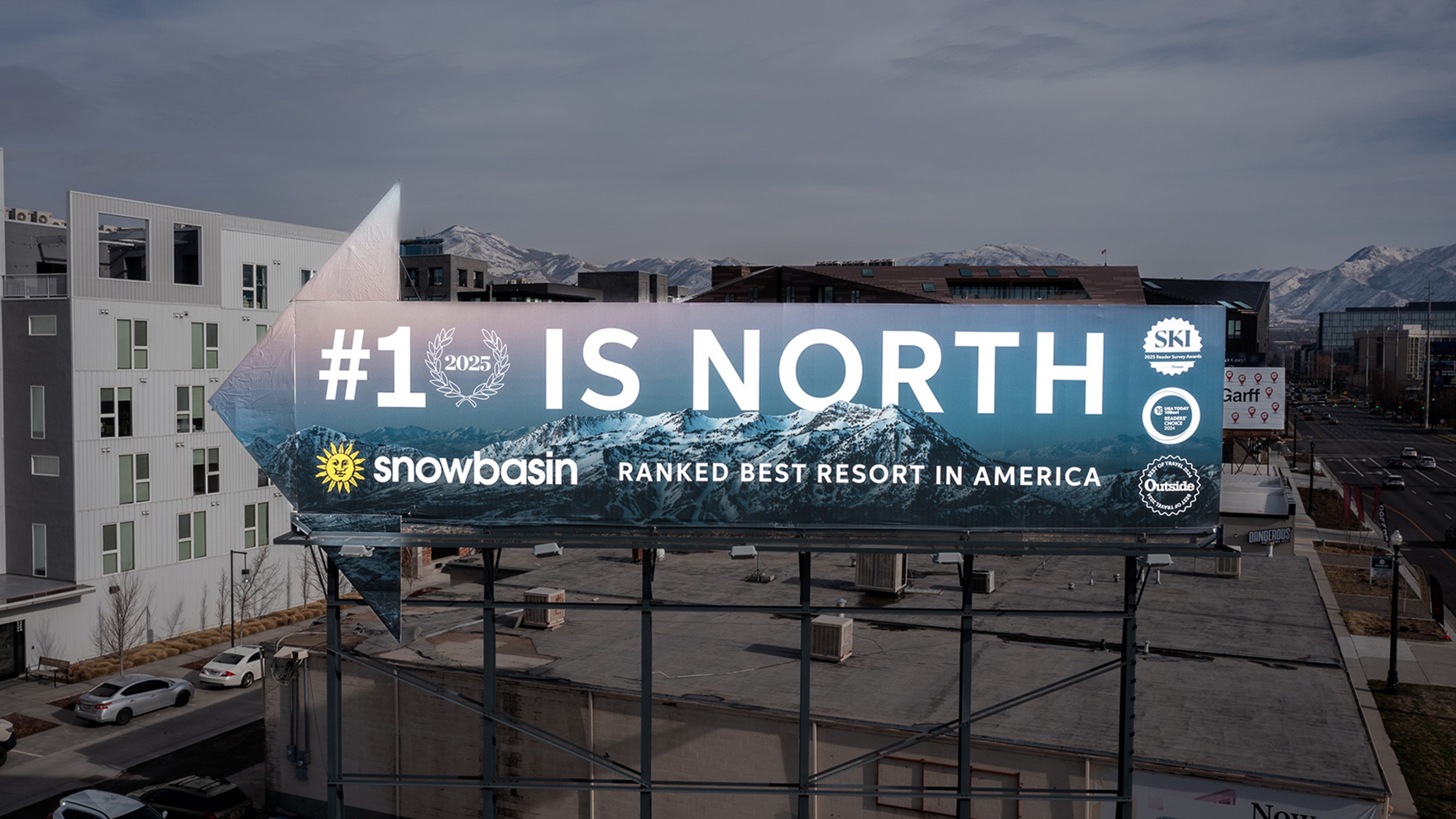
I am really glad we did that, because little did I know it would be our No. 1 credential for AI models.
Once I built Centium and pointed it at Snowbasin, I went looking for the citations to USA Today in the data, but it was not there. After nearly a year of measurement, to this day we have seen zero citations to the actual USA Today webpage where Snowbasin received the top ranking. The models only saw what we posted about it, not them.
fame is not what they are weighing.
The first reason is that a publication covering everything is competing against specialists in every category.
In skiing those specialists are OnTheSnow, Ski Magazine, Powder, and the resorts themselves. A national outlet is more famous than all of them and still finishes behind them on a ski question, because fame is not what the models are weighing. The award was real, and the outlet was prestigious. It still was not where the models were looking.
The second reason is the one I opened this article with, and it is the one that should worry you.
The USA Today 10Best subdomain that published our award blocks AI crawlers in its robots.txt. Run it through our own tool and 11 of the 21 crawlers we check come back blocked.
Look at which ones. GPTBot, ClaudeBot, Google-Extended, PerplexityBot, OAI-SearchBot, CCBot. Those are the crawlers that build what a model knows, either by training on a page or indexing it for search. The ones still allowed are mostly live fetchers that only run when a user asks for that exact page.
Googlebot is allowed too, and it crawls the whole site. If the training and live-search split is new to you, how AI answers questions covers why a blocked crawler removes you from both.
So the article ranks in Google exactly the way you would expect, and it is completely invisible to AI. Same page, same URL, two entirely different outcomes depending on which kind of search you are talking about.
Crawler access at the property that published the award
| Crawler | Purpose | Status |
|---|---|---|
 GPTBot GPTBot | AI Training | Blocked |
| ChatGPT-User | Live Browsing | Blocked |
| OAI-SearchBot | Search Indexing | Blocked |
 ClaudeBot ClaudeBot | AI Training | Blocked |
 Google-Extended Google-Extended | Gemini Training & Search | Blocked |
 PerplexityBot PerplexityBot | Search Indexing | Blocked |
| Open Training Data | Blocked | |
| Apple AI / Siri | Blocked | |
| Googlebot | Search Indexing | Allowed |
| Claude-User | Live Browsing | Allowed |
| Perplexity-User | Live Browsing | Allowed |
take control of your own narrative.
When we measure our National Ski Resorts category on Centium with prompts like "best places to ski in America" or "top US ski resorts," snowbasin.com is cited in 28.2% of all responses. That makes it the fourth most cited source of any kind in the category, behind only OnTheSnow, Ski Magazine, and Skiresort.info. Every number here comes from the sources section of a normal dashboard.
Resort-owned domains cited in prompts about the best ski resorts in the United States
Among ski resort-owned domains, Snowbasin at 28.2% is in a league of its own. The next closest resort is Park City at 3.5%. Our strategy helped a regional resort out-cite the biggest destination brands in the country on national questions.
Most of it traces to a single page: snowbasin.com/discover/no-1-resort-in-america. That single page works out to 53% of every citation AI made to Snowbasin's website.
We were not being overly clever. We just wanted the award placed somewhere obvious. But that page turned out to be the only route AI had to the fact that we won, because USA Today had closed off access to the models.
I have talked about this many times as a fundamental AEO strategy, and I have been calling it content amplification. You take a validating story that lives on someone else's domain and you give it a permanent home on yours.
the more places it lives.
I went back through ten months of Snowbasin's dashboards and found another variable to this strategy. The award did not stay in one place. Regional press picked it up. Deseret News wrote about it. The Salt Lake Tribune wrote about it. FOX 13 and KUTV covered it. Visit Ogden, our local tourism board, put it on their blog. I also went and added the ranking to our Wikipedia page, which took about ten minutes.
Every one of them got cited. Look at which model found which.
Where AI found the ranking, by page
A few reasons why this works so well.
AI is designed to repeat patterns. The more places a model sees the same narrative, the more it believes that it must be factual. It counts far more when the people making the claim are not you. When five outlets independently are all saying the same thing, it becomes truth. That is what these models are hungry for.
Each model searches a little differently. That showed up in our sourcing many times. ChatGPT found the Salt Lake Tribune. Perplexity found FOX 13 and KUTV. Gemini found the local tourism board, and nothing else did. The more surface area you cover, the more likely it is that the narrative you want reaches all of them.
Getting outlets to run the story in the first place is a PR job, and PR is the strongest lever there is on AI visibility.
Wikipedia is the exception, and it is worth pausing on. Our Wikipedia page was cited 57 times, and it is the only source in this entire story that all models found. It also outranks every competitor's page: Park City at 37, Alta at 36, Snowbird at 36, Vail at 29. If you only do one thing outside your own website, make sure your Wikipedia entry is accurate and current.
The only thing you can guarantee lasts forever is a page that you own. Our own pages picked up 323 citations over a 10-month span, more than every outside outlet combined, and they showed up in eight of those ten monthly reports. Each of those news stories showed up in sourcing, then dropped out. Snowbasin's own page has consistently been cited at a very high rate ever since it was published. Plus, you cannot control how third parties will manage their websites. What if USA Today overwrites the page when the 2026 rankings come out? What if the local media outlets redesign and trim some old archives?
what I would do.
You have a great sandwich on the menu. Somebody credible said it was the best in town. Here is what I would actually do about it.
- Go find what you have already won. Awards, rankings, best-of lists, certifications, a great review from someone who matters, an active Reddit thread. Most brands have more than they remember and a home for almost none of it.
- Check whether AI can read the original. Run the outlet through our free AI Access Tester. If they block the crawlers, that accolade goes straight to the top of your list, because right now nobody can see it.
- Give the big ones a real page. One durable URL per major win, written so it is still accurate in two years, linking to the original coverage. I like to pull a couple of quotes from the publication that validate the brand. Give AI exactly what you want it to take away.
- Write it with AI search-friendly headlines. Being proud to be recognized as a leader does not give the model much to work with. "Snowbasin Ranked Best Ski Resort in America by USA Today" is the direct approach the models prefer. In our query fan-out research, four in five prompts trigger at least one search for the best or top option.
- Build a hub that packages it for the models. A brand we track in outdoor food maintains a single standing awards page that AI cited across 9 different prompts. Its own domain is the fourth most cited source in their category.
- Put your top accolades on Wikipedia. It was the one source every model found in our data, and ChatGPT cites Wikipedia more than any other website. Adding a ranking with a proper citation took me about ten minutes.
- Tell everyone who can help you repeat it. Tourism boards, partners, trade associations, retailers, suppliers, local press. It costs you an email and can have a massive amplification impact.
- Then make sure your own crawlers are open. None of this works if your robots.txt is also blocking the models. I have seen it more than once, usually put in place by an IT team years ago when the servers were getting overloaded.
A few things to help: our Wikipedia Citation Generator turns a sentence and its sources into wiki-ready markup, the fan-out number above comes from our query fan-out research, and our guide to crawler access explains what the robots.txt directives mean.
which credentials survive.
As we move to an answer-based way of brand discovery, clicks drop. Data on zero-click searches continues to trend up, with recent data from SimilarWeb reporting it at 68% in 2026. Media is becoming more influential as they drive these answers, but they have nothing to show for it but declining traffic. They are going to have to do something different, and restricting models will be a choice many make. Just test a few of your favorite outlets, and you will see that they already have.
If you want to see where your own brand stands before any of this, how we measure AI visibility walks through the methodology behind every number in this article.
Those headlines about media companies blocking AI are not just about media companies. For brands that have leveraged PR well, it could mean your top credentials become invisible. It is time to take action and ensure they surface.
questions, answered.
You take a validating story that lives on someone else's domain and you give it a permanent home on yours. A press hit lives under the publisher's rules. A page you publish about that hit lives under yours. Both can be cited by AI, but only one of them is something you control.
No, and you should not do that. Republishing someone else's article is a copyright problem and it hands AI a duplicate rather than a new source. Amplification means writing your own page about the recognition: what you won, who gave it, when, and a couple of quotes from the coverage that validate the brand.
Two common reasons. The publication may not be a source AI reaches for in your category, because a publication covering everything competes against specialists in every category it touches. Or the publication blocks AI crawlers in its robots.txt, which makes the article invisible to the models by design. In both cases your own page becomes the only route the model has to the fact.
Check their robots.txt, or run the domain through Centium's free AI Access Tester, which reads the file and shows you which AI crawlers are allowed in. Blocks that did not exist two years ago are now common on major news properties, and a blocked outlet means that accolade should move to the top of your amplification list.
At least one durable page, and more if the win is significant. Snowbasin ran an evergreen page plus dated news posts, and AI cited seven of them. A single standing awards page also works and is easier to maintain. One page you actually keep current beats five you abandon.
Yes, and it measurably matters. When regional press, a local tourism board, and a TV station each covered the same accolade, different AI models found different ones. No single source reached every model. Every additional domain carrying your claim is another way in, and it counts for more when the claim is not coming from you.
Publish it anyway. An accolade from two seasons ago with no home on your site is a fact AI cannot verify. Give it a page, date it honestly, and it becomes citable.
Watch your own domain in your sourcing data. Centium reports which of your pages AI cites and which prompts triggered them, so an amplification page either shows up against the questions you targeted or it does not. If it does not, the usual causes are crawler access on your own site or a page that never states the claim plainly.
More guides
Which Writers AI Cites in Your Category
Two new features are live. Influential Voices names the people behind the pages AI cites, and Content Freshness shows how old that content is.
Expanded Sentiment Tracking in Brand Perception
Brand Perception shows the themes AI models use when they talk about you. Each theme now expands to explain what the models actually said, in their words, with sentiment attached.
Now Tracking Google AI Mode
Centium now tracks Google AI Mode as a sixth model, included on every plan automatically. Six models across 120 prompts is 720 AI responses behind every report.